A “Code red for humanity” — that was how the UN Secretary-General described the IPCC’s 2021 climate report. Four years later, the warning has only intensified. 2024 was the hottest year on record, with global temperatures exceeding 1.5°C above pre-industrial levels for the first time. Meanwhile, global GHG emissions continue to rise, increasing another 1.3% in 2024. For a reality check, one need only observe the local or regional weather — the floods, droughts, wildfires, and excessive heat warnings that have become routine. The IPCC’s directive remains urgent:
“Stabilizing the climate will require strong, rapid, and sustained reductions in greenhouse gas emissions, and reaching net zero CO₂ emissions.”
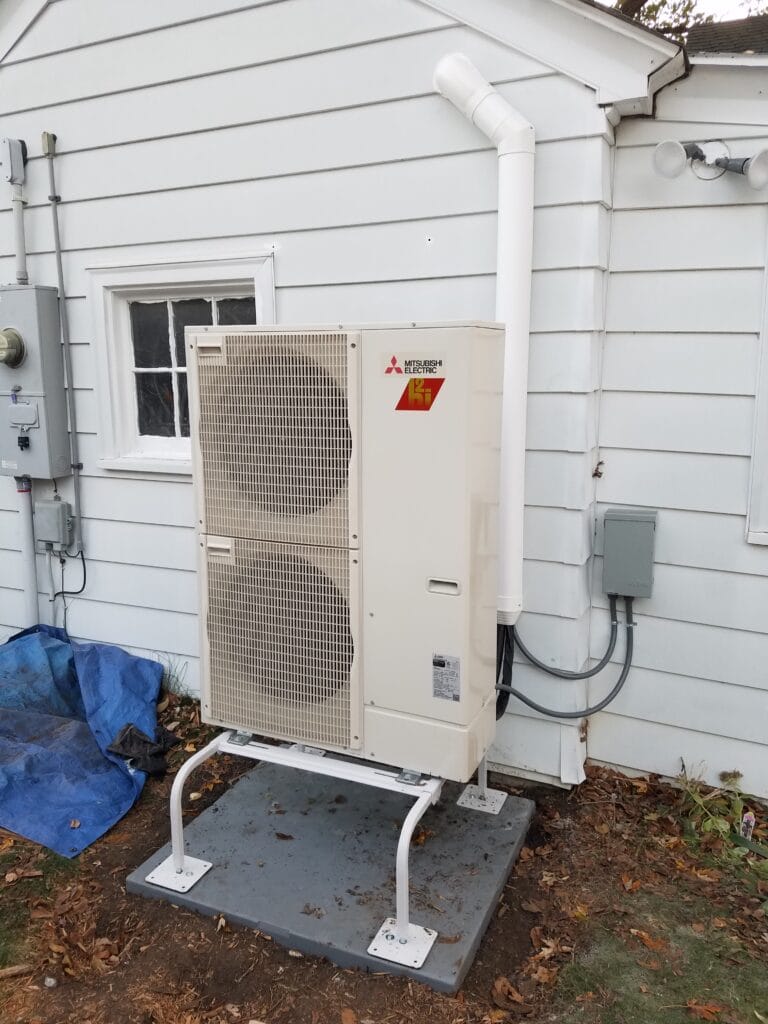
Given this challenge, is there anything I can do to have a high positive impact on reducing GHG emissions? After researching my options, one of several actions I took at the personal level, in a cold climate, was to install and run a cold climate air source heat pump (ccASHP).
Many non-legal questions have been directed to me about the ccASHP, so I offer some reflections after using it through five heating and cooling seasons. In a nutshell, there is no furnace for those -21°F winter days and nights — the natural gas line was cut and capped. The heat pump system delivered comfort even at -21°F. This is where the strong, rapid, and sustained reduction in GHG emissions enters.
In addition to being more efficient than a furnace or air conditioner, my ccASHP is powered by electricity generated with solar energy. This is how it operates: during the heating season, the ccASHP simply transfers heat from outside to indoors. The system works in reverse to provide cooling during hot, humid days. After five years of operation, the bottom line remains: comfort during the coldest winter days and the hottest and most humid days while using a very efficient heat transfer system that operates with carbon-free energy.
The U.S. Department of Energy provides a good overview of heat pumps and technical details (see https://www.energy.gov/energysaver/air-source-heat-pumps).
Imagine the impact millions of these systems can have on efforts to reduce GHG emissions. The Inflation Reduction Act had provided up to $2,000 in federal tax credits for heat pump installations, though that credit expired at the end of 2025. Some state and utility rebate programs remain available—check with your local utility or visit the DOE’s Energy Saver site for current incentives as you plan your installation.
To learn more about my ccASHP installation—or to discuss legal and policy approaches that advance energy efficiency and renewables—please use the contact button to reach me.